15+
customizable ClickUp layouts documented on the product feature page
An evidence-led map of self-hosted, open-source, SaaS, GitHub-native, forked, and built-from-scratch paths away from ClickUp—without pretending a Kanban clone is a work hub.
The research began by documenting ClickUp’s capability model before naming any alternative. The practical baseline is the connection between work hierarchy, flexible task data, daily views, rich Docs/wiki, comments, permissions, reporting, and search. Breaking that connection is a workflow downgrade even if a replacement has attractive individual screens.

Every finalist was tested against seven dimensions: tasks/issues, Kanban and other views, roadmap, rich knowledge/Docs, multi-user permissions, licence/cost, and operating burden.
The table does not award points for a feature name alone. It records only validated capability, and it leaves gaps visible. “Conditional” means the product deserves a controlled pilot, not a production commitment.
| Candidate | Licence / cost | Views and roadmap | Knowledge fit | Operational posture | Decision |
|---|---|---|---|---|---|
| OpenProject CE | GPLv3 · unlimited users/projects · no Community seat fee | Kanban, query-backed lists/tables, Calendar, Gantt, multi-project timeline | GFM Wiki, tables, history/diffs, Markdown export | Moderate: PostgreSQL, TLS, backups, upgrades | Top pilot |
| Leantime | AGPLv3 core · paid proprietary plugins | Kanban, Table, List, Calendar, project Gantt | Rich Wiki; Markdown round trip/history gaps | Moderate: Docker/PHP, DB, cron, plugins | Conditional |
| Plane CE | AGPLv3 · no stated CE seat cap | List, Board, Calendar, Table, Timeline | Project Pages; workspace Wiki / advanced features gated | Moderate: multi-service Compose stack | Conditional |
| Vikunja + Docmost | AGPLv3 + AGPLv3 · no identified Community cap | List, Table, Kanban, Gantt | Real-time rich Docs, tables, embeds, history, Markdown interchange | Medium-high: two identities, two backups, bridge work | Conditional |
| Nextcloud Deck + Collectives | AGPLv3 stack · host-defined capacity | Kanban and Gantt; task List/Table gap | File-backed Markdown Wiki, versions, search, import | Material: Nextcloud app/version operations | Conditional |
| YouTrack Server Free | Proprietary · ≤10 Users / 3 Agents | Table/list/tree, Kanban, calendar widget, Gantt | Knowledge Base, history, Markdown export/importer | Moderate: Docker and data volumes | Conditional |
| GitLab SM Free | Open-core · self-managed Free | Issues/lists/boards; Free roadmap/Gantt gap | Git Wiki; general live Docs gap | High: capacity, releases, backup exclusions | Reference |
| GitHub Projects | Proprietary SaaS / commercial GHES | Table, Board, Roadmap; no Calendar | Portable Git Wiki, but private wiki is paid | Low cloud / high GHES | Reference |
| AppFlowy self-host | Commercial multi-user server; Free one seat | Rich database views; no verified Gantt | Strong rich Docs and Markdown support | Moderate-high; licence blocks free team use | Exclude now |
It has the broadest verified foundation compatible with the stated self-hosted, open-source, no-seat-fee preference. The risk is not missing module count; it is whether a more formal work-package/query model and Wiki feel intuitive enough for daily knowledge work.
Use Leantime if an integrated project Wiki matters most, Plane for modern work-item UI, Vikunja + Docmost for Markdown-first Docs, or Nextcloud for a files/identity-centric stack. A broad simultaneous bake-off produces shallow evidence.
A pilot must be an operating test. It should use representative ClickUp hierarchy, custom fields, attachments, comments, permissions, Docs, and planning—not a blank demo board. Restore and upgrade are first-class product tests because self-hosting makes them your responsibility.
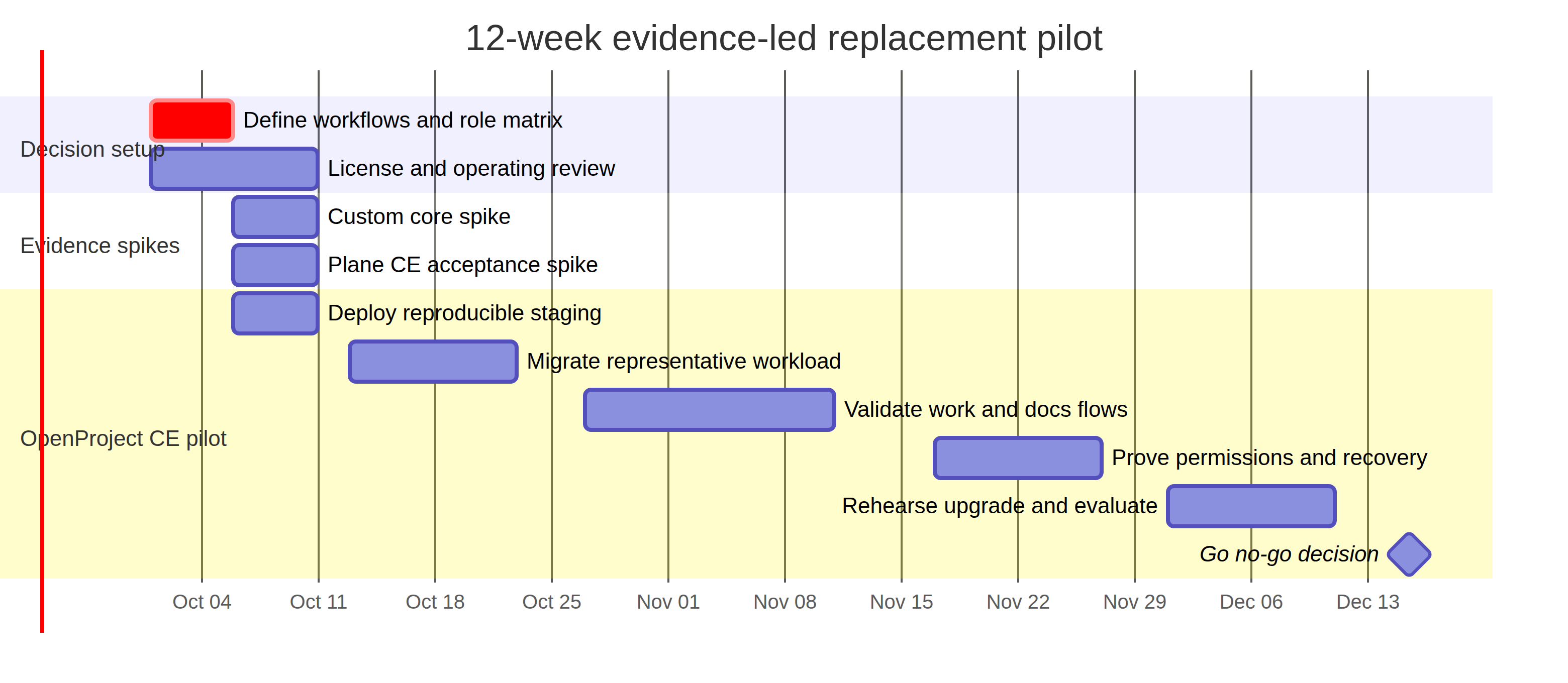
Map 25–50 real work items across hierarchy, dates, fields, comments, dependencies, files, Docs, and access. Use a loss register, not an anecdotal impression.
Run a role matrix for admin, manager, contributor, reader, and guest. Confirm least privilege across tasks, Docs, files, search, dashboards, and exports.
Restore database, files, configuration, and representative content into clean staging. Rehearse the upstream upgrade before production approval.
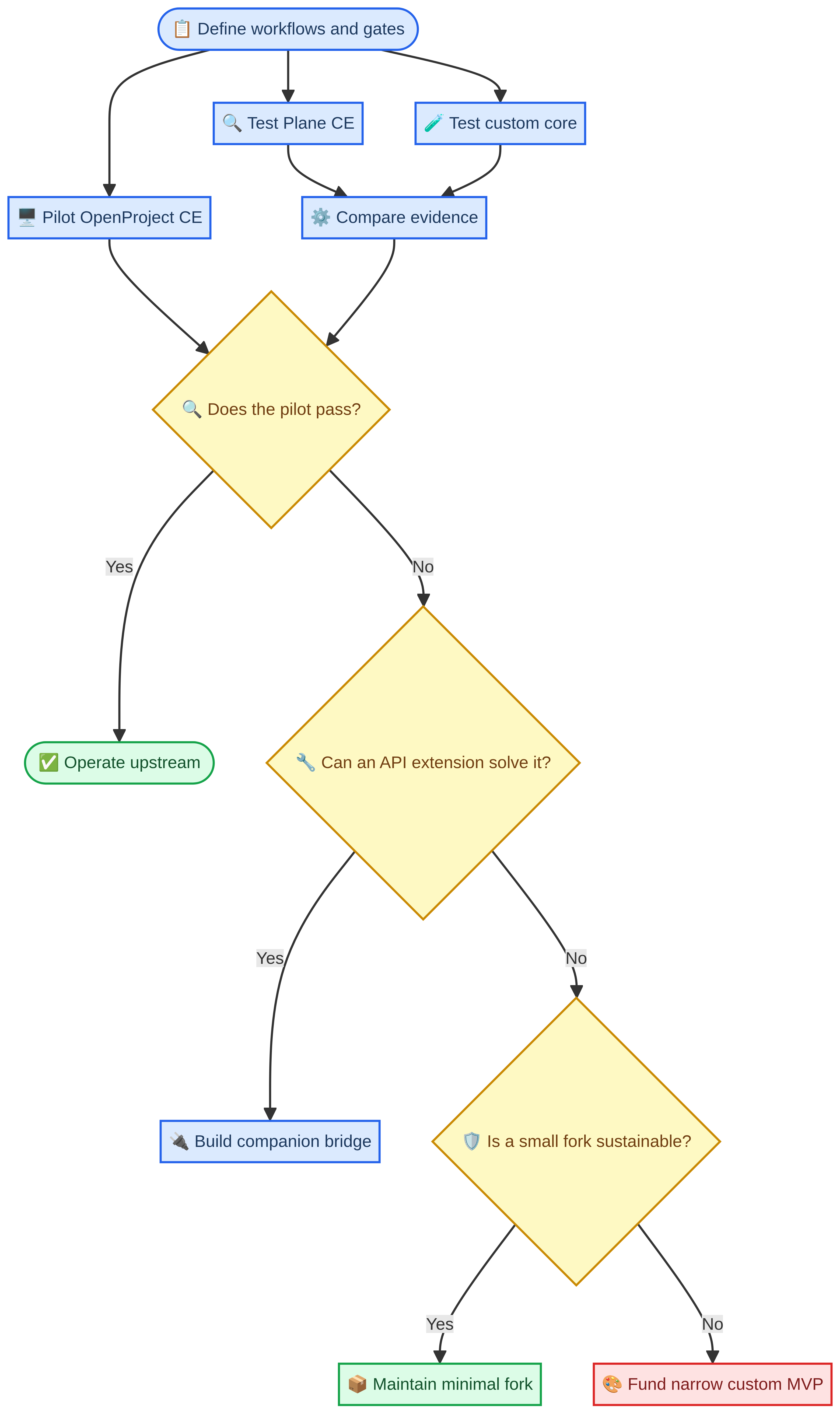
Forking exchanges initial speed for maintenance debt. A greenfield rebuild trades vendor dependence for a full product and operations obligation. The evidence-led default is an upstream OpenProject CE pilot, then a narrowly scoped API/webhook companion, then a minimal maintained fork only for a proven durable gap.
Release 1 needs a workspace-scoped task graph, List/Board/Table/Calendar projections over one query contract, permission enforcement across HTTP/WebSockets/search/files, audit/outbox durability, secure attachments, rich Docs with recovery, and tested backups. Advanced roadmaps, workload, marketplace integrations, AI, and ClickUp-level UX parity are later product programs.
Read the staged implementation plan →Use PostgreSQL as source of truth; one canonical authorized work model; an append-only activity/outbox record; private S3-compatible objects; an API/worker modular monolith; and a separately deployed collaboration runtime only after live-document Stage 0 tests. Rich-text JSON is canonical; Markdown is compatibility interchange, not the persistence model.
Read the build strategy blueprint →This is a static interface concept—not a built application. It shows the product principle behind the implementation plan: a canonical task can be viewed, moved, scheduled, and documented without changing tools or losing context.
The static site is a visual briefing layer. The Markdown report contains citations, decision logic, pilot gates, and links to every detailed evidence record.